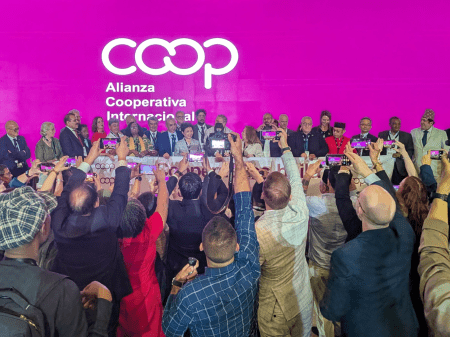
In his statement that concluded the High Level Round table on Strengthening Three Pillars of Social Development at the World Social Summit, ICA President Ariel Guarco highlighted how reversing a situation that still sees so many in poverty “does not depend solely on our ability to help those people; it depends on accurately identifying what caused – and continues to cause – this scourge … It will be of no use to continue discussing, in our case, the role of cooperatives in promoting inclusion if the dominant paradigm in the global economy continues to generate ever more excluded people.”
Poverty reduction is a central pillar of the 2030 Agenda - and the first Sustainable Development Goal (SDG) – yet the progress is falling far behind. In 2025, an estimated 808 million people (about 10% of the world’s population) are projected to live in extreme poverty, surviving on less than USD 3.00 per day (2021 PPP), while access to work, once considered the main pathway out of poverty, no longer offers a guaranteed escape, with more than 240 million workers still living below the poverty line.
Cooperatives are uniquely positioned to combat poverty and uphold human dignity. By placing people before profit, they create pathways out of poverty through decent work, shared purchasing power, social inclusion, and community solidarity. Through collective ownership and decision-making, they promote fairer wealth distribution and build social capital
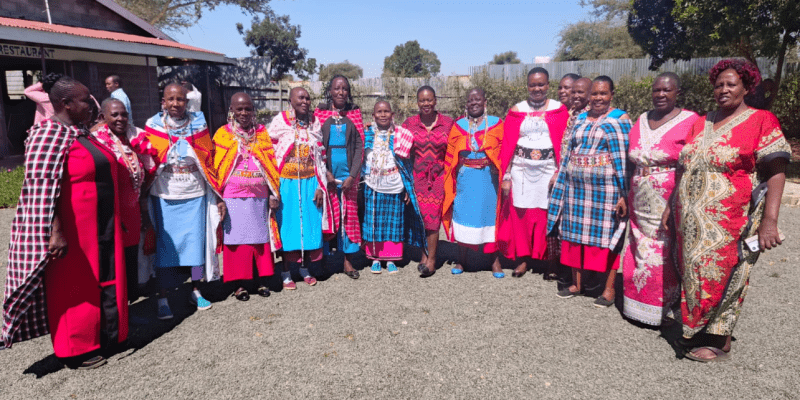
In Kenya, the Maasai Kajiado Women Dairy Cooperative is a women-led organisation established to enhance household incomes and support family livelihoods by empowering women traditionally excluded from livestock ownership and financial decision-making. Today, it has grown to over 5,000 members, with more than 3,200 actively involved across Kajiado Central, East, and West. Through collective milk collection, processing, and marketing, members have improved market access, secured fairer prices, and stabilized incomes. Beyond economic gains, the cooperative advances gender equality by granting women financial control, promotes environmental sustainability through pasture conservation and water harvesting, and fosters community cohesion and collective empowerment among Maasai women.
The Associação dos Catadores de Papel, Papelão e Material Reaproveitável (ASMARE), founded in 1990 in Belo Horizonte, Brazil, is one of the most internationally recognised examples of a cooperative movement transforming informal, marginalised work into dignified livelihoods. Before ASMARE, waste pickers—many of them women, Afro-Brazilian, or unhoused—worked in extreme precarity, earning little and lacking legal recognition or social protection. ASMARE organised these workers into a cooperative structure, negotiated formal agreements with the municipality, and secured access to recycling centres, equipment, training, and safe working conditions. These changes allowed waste pickers to earn more consistent incomes, improve occupational health and safety, and access social security enrollment and municipal services.
Through its international cooperative activities, Food and Forest Development Finland (FFD) founded by Pellervo Coop Center, helped found the Amritpur Social Entrepreneur Cooperative (ASEC) in Nepal. Formed by ten community forest user groups in Nepal’s Dang District, ASEC has now grown to over 9,200 members managing community forest resources sustainably. It strengthens forest users’ livelihoods through entrepreneurship, leadership, and climate resilience training. Through the latter, FFD is equipping the local community with ad-hoc tools to avert and adapt to natural disasters, today among the key drivers of poverty.
Read more about these and other ways cooperatives advance SDG1 in the IYC Policy Brief