The International Cooperative Alliance (ICA), Cooperatives Europe and representatives of the cooperative movement met with the Organisation for Economic Co-operation and Development (OECD) at its headquarters in Paris to discuss taxation and cooperative enterprises, as well as other legal and policy issues affecting cooperatives.
The discussions focused on a central question: how can tax regimes adequately reflect the distinctive nature of the cooperative enterprise?
Tax frameworks do not always fully account for the particular characteristics of cooperatives. This can create uncertainty around what constitutes appropriate and adequate tax treatment, and around why certain differences in treatment should not necessarily be understood as preferential concessions. In some cases, differentiated treatment may instead be necessary to recognise the specific purpose, ownership and governance structures, capital arrangements, relationship with members and allocation of surpluses that distinguish cooperatives from other forms of enterprise.
The meeting therefore explored the characteristics of cooperatives that may warrant differentiated treatment within tax law and policy, while safeguarding the Cooperative Identity and ensuring consistency with broader principles of fair and effective taxation. Participants also discussed a range of other legal and policy issues and the importance of building stronger working relations between the OECD and the cooperative movement.
Strengthening dialogue between the OECD and the cooperative movement
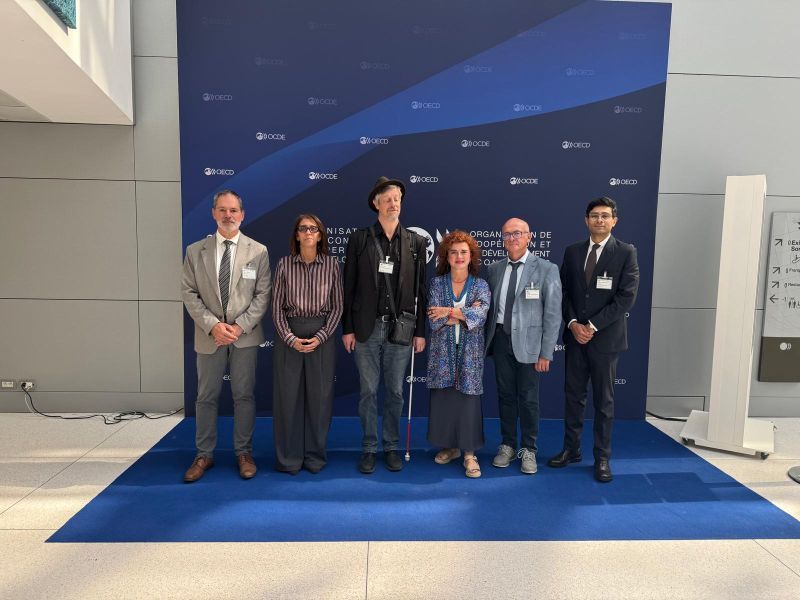
The cooperative delegation comprised Rosa María Lavín Ibarra, President of Konfekoop; Mikel Larrea Azpeitia, Director General of Konfekoop; Giuseppe Guerini, Vice-President of the International Cooperative Alliance and President of Cooperatives Europe; Prof. David Hiez, Member of the ICA Cooperative Law Committee; and P. Santosh Kumar, ICA Director of Legislation.
The OECD was represented by Amal Chevreau, Head of the Social Economy and Innovation Unit within the OECD CFE/LEED Programme, together with colleagues working on social economy and related policy areas, including taxation.
The meeting identified several promising avenues for continued cooperation, including strengthening working relations between the OECD and the cooperative movement on taxation and public policy, establishing a more continuous dialogue for the exchange of knowledge and evidence, and developing analysis that takes sufficient account of the specific legal and economic characteristics of cooperatives.
The OECD also highlighted the reach of its work beyond its member countries, including engagement with governments and policy processes in ASEAN, India and South Africa, among others.
The conversation will continue at the ICA Global Cooperative Conference in Panama, including during the breakout session “Protecting the Cooperative Identity” on 16 September 2026. The session will provide an opportunity to continue exploring the legal and policy frameworks needed to protect and strengthen the Cooperative Identity, including questions around the appropriate treatment of cooperatives within taxation systems. For more information about the discussion or the breakout session in Panama, please contact kumar@ica.coop.
This meeting took place in the framework of the ICA-EU Partnership (2024-2028), also known as #coops4dev🌍, a five-year international cooperative development programme that aims to strengthen the ICA network and position cooperatives as key development actors within the European Union Development Agenda.