On the International Day of Peace, the International Cooperative Alliance is renewing its call to invest in peace; not only by responding to conflict, but by addressing the economic and social conditions that allow conflict to take root.
This year’s International Day of Peace, observed on 21 September under the theme “Invest in Peace: For Everyone, Everywhere, Every Day,” comes at a time when conflicts are growing in scale and complexity, while communities around the world continue to experience violence, displacement, inequality and insecurity. The United Nations is using this year’s observance to highlight the everyday work of people and communities who bridge divides, build trust and create the foundations for lasting peace.
For the global cooperative movement, this call resonates deeply.
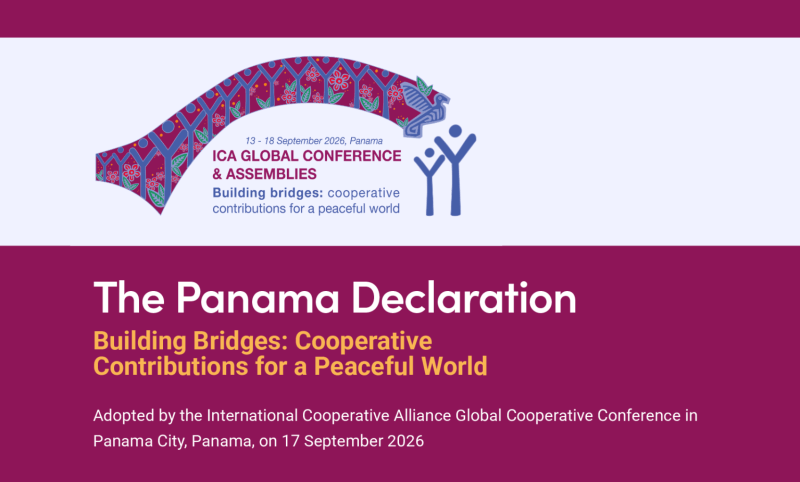
Just days ago, on 17 September in Panama, representatives of the cooperative movement adopted the Panama Declaration: Building Bridges – Cooperative Contributions for a Peaceful World, reaffirming their conviction that “cooperation is a powerful force for peace, justice, democracy, inclusion, solidarity and shared prosperity.”
The Declaration takes a broad view of what it takes to build peace. Positive peace requires more than ending violence. It requires societies where people can live with dignity, justice, equality, security, and opportunity; where differences can be addressed through dialogue and appropriate institutional mechanisms; and where communities and institutions are built on trust and solidarity. It also means addressing the root causes and structural conditions that can allow conflict to emerge and persist—including poverty and inequality, exclusion, marginalisation, weak institutions, lack of meaningful participation, human-rights violations and environmental pressures that undermine livelihoods and security.
This is where the idea of a peace economy becomes critical.
The Panama Declaration calls for an economy that invests in dignified lives and livelihoods, reduces inequalities, expands meaningful participation, strengthens social and economic inclusion, builds resilience and directs resources towards sustainable development rather than the drivers and consequences of conflict. It recognises that cooperatives are already contributing to many of these foundations through the way they create livelihoods, expand economic participation and ownership, strengthen local economies and build resilient communities.
“Wherever there is cooperation, there is a seed of peace, democracy, inclusion and equity that we must nurture so that it grows and multiplies in every region,” said Dr Ariel Guarco, President of the International Cooperative Alliance.
That contribution is not theoretical. Cooperatives bring people together around shared economic interests and democratic decision-making. They create spaces in which people learn to work across differences, share responsibility and build trust. They help sustain livelihoods and essential services during crises, and they can contribute to rebuilding local economies and communities in periods of recovery and reconstruction. The Panama Declaration therefore calls on cooperatives to make positive peace part of everyday practice and to work alongside governments, the United Nations, civil society and peacebuilding actors before, during and after conflict.
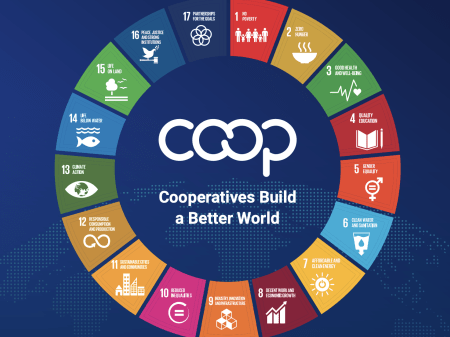
The wider UN development agenda reinforces this connection between peace and inclusive economies. Bjørg Sandkjær, the UN Assistant Secretary-General for Policy Coordination, told participants in Panama: “The SDGs are a shared blueprint for peace and prosperity.” She added that ensuring no one is left behind and enabling people to participate fully in economic and social life are essential to stronger and more resilient economies. Her message echoes the United Nations General Assembly’s proclamation of 2025 as the International Year of Peace and Trust, which called for strengthening peace and trust through dialogue, cooperation, and peaceful resolution of conflicts.
The Panama Declaration carries that message forward into a practical agenda. It calls on governments to recognise cooperatives as strategic partners in peacebuilding and development, on the United Nations and international and regional institutions to engage cooperatives as implementation partners, and on development partners, civil society, academia and business to work with cooperatives to scale people-centred solutions. It also calls on states to uphold the rule of law, honour their obligations under the UN Charter and international law, and resolve disputes through peaceful means.
For ICA, investing in peace means investing in the people, institutions and economies that make peaceful societies possible.
It means supporting dignified work and livelihoods. It means reducing inequality and exclusion. It means creating opportunities for young people and women to participate and lead. It means strengthening democratic institutions, community resilience and social cohesion. And it means recognising that local action, from a cooperative helping a community recover from crisis to millions of members participating democratically in economic life, can contribute to global peace.
The challenge now is to turn commitment into action.
As the Panama Declaration states: “From Panama, we therefore call for action: to address the roots of conflict before they become violence; to build economies that create dignity, opportunity and inclusion.”
On this International Day of Peace, the cooperative movement is renewing that call: let us invest in peace, practice cooperation, and build a peace economy—together.